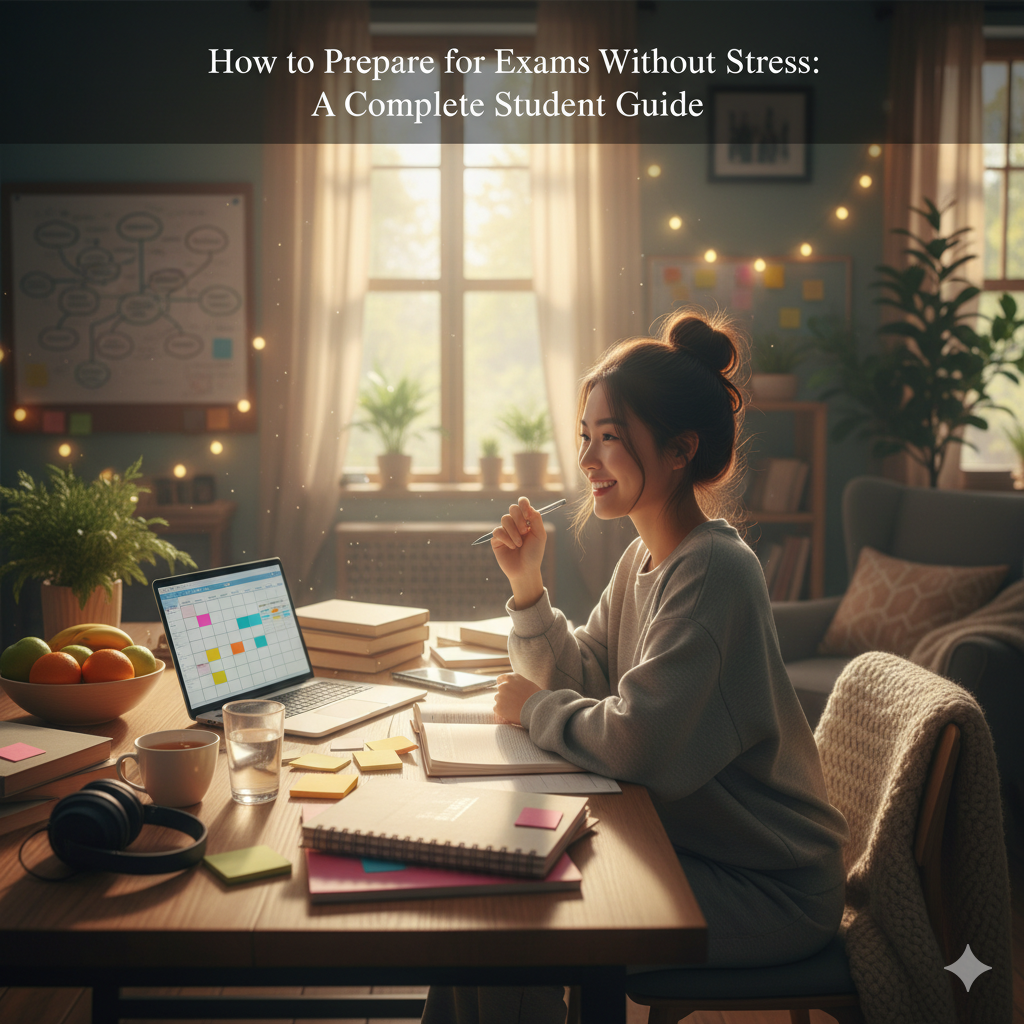
Exams are an important part of academic life, but for many students, they also bring stress, anxiety, and sleepless nights. The good news is that with the right approach, you can prepare for exams effectively without feeling overwhelmed. In this guide, you’ll learn practical, proven strategies to stay calm, focused, and confident during exam preparation.
Why Do Exams Cause Stress?
Before learning how to reduce stress, it’s important to understand why it happens:
- Fear of failure
- Poor time management
- Last-minute cramming
- High expectations from parents or teachers
- Lack of proper study planning
The key to stress-free exam preparation is organization, balance, and a positive mindset.
1. Create a Realistic Study Plan
A well-structured study plan is the foundation of stress-free preparation.
How to do it:
- Break your syllabus into small topics
- Set daily and weekly study goals
- Allocate time for revision
- Include short breaks
Tip: Avoid overloading your schedule. Studying smart is better than studying long hours.
2. Start Early and Avoid Cramming
Starting early gives your brain enough time to understand and retain information.
Benefits of early preparation:
- Less pressure before exams
- Better memory retention
- More time for revision and practice
Even studying 1–2 hours daily consistently is more effective than last-minute cramming.
3. Use Effective Study Techniques
Studying without a strategy increases stress. Use proven techniques instead:
- Active learning: Teach concepts aloud or explain them to someone
- Pomodoro Technique: Study for 25 minutes, break for 5 minutes
- Mind maps: Visualize concepts for better understanding
- Practice questions: Strengthen confidence
4. Maintain a Healthy Routine
Your physical health directly affects your mental performance.
Healthy habits to follow:
- Get 7–8 hours of sleep
- Eat balanced meals
- Stay hydrated
- Avoid excessive caffeine
A healthy body supports a focused and calm mind.
5. Take Regular Breaks
Studying non-stop can lead to burnout and anxiety.
Productive break ideas:
- Light stretching
- Short walks
- Deep breathing exercises
- Listening to calm music
Breaks refresh your brain and improve concentration.
6. Manage Exam Anxiety with Relaxation Techniques
If stress starts to build up, use relaxation methods to stay calm.
- Deep breathing
- Meditation or mindfulness
- Positive affirmations
- Visualization of success
Even 5–10 minutes daily can make a big difference.
7. Avoid Comparisons with Others
Comparing your preparation with classmates can increase stress and self-doubt.
Remember:
- Everyone learns at a different pace
- Focus on your own progress
- Trust your preparation
Confidence comes from consistency, not comparison.
8. Revise Smartly Before Exams
Revision doesn’t mean re-reading everything.
Smart revision tips:
- Focus on key topics
- Review notes and summaries
- Solve past papers
- Practice weak areas
This boosts confidence and reduces last-minute panic.
9. Stay Positive on Exam Day
Your mindset on exam day matters as much as preparation.
- Avoid negative thoughts
- Reach the exam center early
- Read questions carefully
- Manage time wisely
Believe in yourself—you’ve already done the hard work.
Final Thoughts
Preparing for exams without stress is possible when you plan ahead, study smart, and take care of your mental and physical health. Exams are just a part of life—not a measure of your worth. Stay calm, stay focused, and give your best effort.
FAQs
Q1: How many hours should I study daily for exams?
It depends on your syllabus and exam type, but 2–5 focused hours daily is usually effective.
Q2: Can stress affect exam performance?
Yes, high stress can reduce concentration and memory. Managing stress improves performance.
Q3: Is taking breaks really helpful?
Absolutely. Short breaks improve focus and prevent burnout.