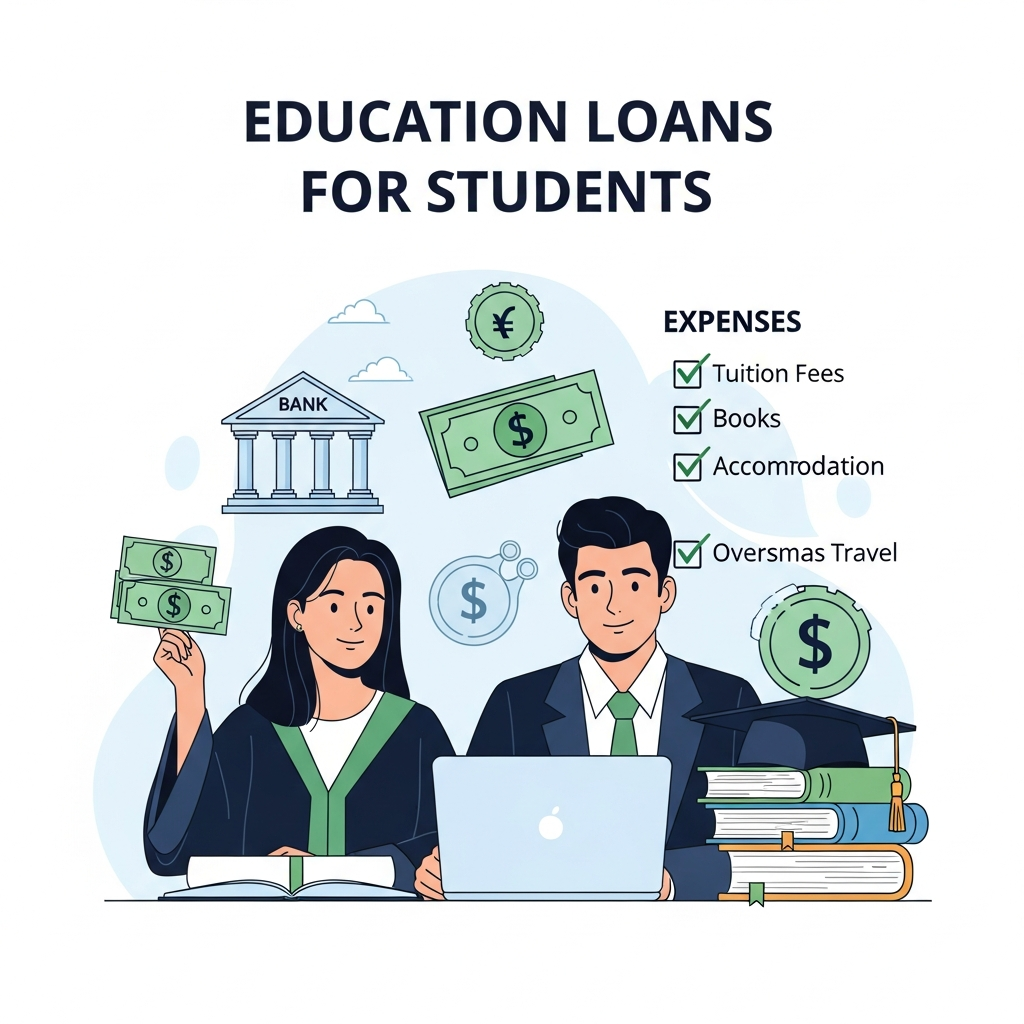
Higher education is one of the most valuable investments in a student’s future—but rising tuition fees and living costs can make it difficult to afford. Education loans help students continue their studies without financial stress by covering academic expenses and allowing flexible repayment options.
This complete guide explains what education loans are, how they work, eligibility criteria, interest rates, benefits, risks, and tips to choose the best student loan.
What Is an Education Loan?
An education loan is a type of financial assistance offered by banks or financial institutions to help students pay for:
- Tuition fees
- Admission and exam fees
- Books and study materials
- Hostel or accommodation costs
- Travel expenses (for overseas education)
These loans are usually repaid after course completion, making them student-friendly.
Types of Education Loans
1. Domestic Education Loans
These loans are for students studying within their home country.
Covers:
- College or university fees
- Technical and professional courses
- Living expenses
2. Overseas Education Loans
Designed for students planning to study abroad (UK, USA, Canada, Australia, etc.).
Covers:
- International tuition fees
- Visa and travel expenses
- Accommodation and insurance
3. Government-Sponsored Student Loans
Some governments offer subsidized loans with lower interest rates or flexible repayment plans.
4. Private Bank Education Loans
Provided by commercial banks and financial institutions with varied interest rates and terms.
Eligibility Criteria for Education Loans
Although requirements vary by lender, common eligibility conditions include:
- Student must have secured admission in a recognized institution
- Course should be approved by relevant authorities
- A co-applicant (parent or guardian) with stable income
- Good academic record (preferred but not mandatory)
Documents Required for Education Loan
Typically, you’ll need:
- CNIC / Passport (student and co-applicant)
- Admission letter from the institution
- Fee structure and course details
- Academic certificates
- Income proof of co-applicant
- Bank statements
Education Loan Interest Rates
Interest rates depend on:
- Loan amount
- Study destination (local or abroad)
- Repayment period
- Credit profile of co-applicant
💡 Tip: Government or subsidized loans usually offer lower interest rates than private lenders.
Repayment Period & Moratorium
Most education loans offer a moratorium period, meaning:
- No repayment during studies
- Repayment starts 6–12 months after course completion
Repayment tenure typically ranges from 5 to 15 years, making monthly installments affordable.
Benefits of Education Loans
✔ Access to quality education
✔ No immediate repayment burden
✔ Flexible repayment options
✔ Covers full education cost
✔ Helps build credit history
Risks and Things to Consider
⚠ Interest accumulation over time
⚠ Repayment responsibility after graduation
⚠ Job uncertainty after studies
👉 Always borrow only what you truly need.
How to Choose the Best Education Loan
Follow these tips:
- Compare interest rates from multiple lenders
- Check processing fees and hidden charges
- Understand repayment flexibility
- Confirm loan coverage details
- Read terms and conditions carefully
Education Loan vs Scholarship
| Feature | Education Loan | Scholarship |
|---|---|---|
| Repayment | Required | Not required |
| Availability | Easy | Competitive |
| Coverage | High | Limited |
💡 Many students use both scholarships and education loans together.
FAQs – Education Loans for Students
1. Can students get an education loan without a co-applicant?
Usually no. Most lenders require a parent or guardian as co-applicant.
2. Are education loans available for overseas studies?
Yes, many banks offer loans specifically for international education.
3. When does repayment start?
Repayment usually begins after course completion plus a grace period.
4. Is collateral required?
For higher loan amounts, collateral may be required. Smaller loans are often unsecured.
5. Can education loans cover living expenses?
Yes, most loans include accommodation and living costs.
Final Thoughts
Education loans make higher education accessible for students who dream big but lack immediate financial resources. By understanding loan terms, comparing options, and planning repayment wisely, students can invest in their future confidently.
If used responsibly, an education loan is not a burden—it’s an opportunity.